Hendersonville, NC · Garage Door Service
Flat Rock has about 1,662 households and most homes went up in the early '90s. Maintenance here targets newer opener boards and nylon rollers, not old torsion drums.
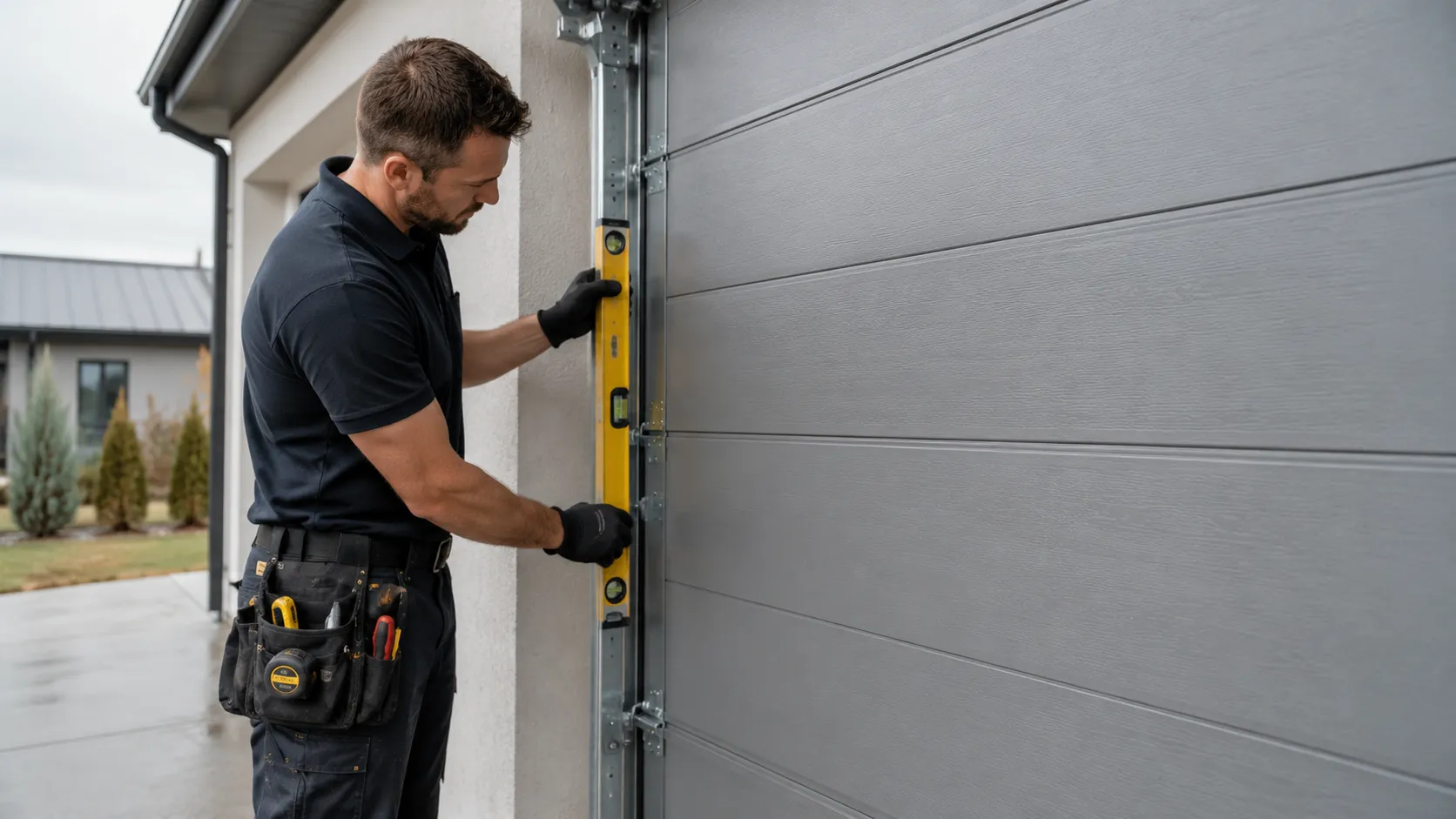
Flat Rock is small - about 1,662 households, nowhere near the size of the wider service area we cover out of Hendersonville, which runs to roughly 28,592 households. That size matters because it means the fault pattern here is narrow and repeats. Most houses in Flat Rock went up around 1993, a good decade newer than the median across the rest of our territory, where the typical build year sits closer to 1982. That gap changes what we're checking on a maintenance visit. Instead of the older side-mounted torsion hardware you find on houses from the '60s and '70s, Flat Rock doors are mostly running factory-installed extension or torsion springs sized for lighter steel panels and circuit-board openers rather than the older relay-and-transformer units. Maintenance on a door like this is less about hunting worn original hardware and more about catching the first signs of wear on parts that were installed with a matching set - rollers, cables, and limit switches that were all new at the same time and tend to fail in the same window. On a 1993-era door, that window is now. Nylon rollers get brittle, the opener's force settings drift, and safety sensors get knocked out of alignment by nothing more than a bike leaned against the track.
We run out of Hendersonville, and Flat Rock is about 4 miles out, so getting a truck to a maintenance appointment isn't the issue - scheduling around what the door actually needs is. Because most Flat Rock homes are on a similar build cycle, we're often looking at the same wear points street to street: a spring that's been cycling for thirty years, an opener logic board that's due for a force recalibration, or weatherstripping that was fine ten years ago and isn't now. Tell us the rough age of the door and whether it's original to the house when you call - it saves a diagnostic trip and lets us bring the right roller and cable stock the first time.
The most common mistake on a door from this era is treating a symptom as the whole problem. A door that's suddenly noisy or slow to close is usually flagged as "needs oil," and sometimes that's true. But on a 1993-built door, noise more often means a roller has finally worn through its nylon jacket and is running on bare metal against the track, or a cable has started to fray at the drum from two decades of the same fold point. Lubricating over either of those buys a few weeks and then the door binds hard, sometimes with the panel still half open. The other place this goes wrong is opener settings. Boards from this build era don't self-correct force limits the way newer smart openers do, so if the door has gotten heavier to lift - sagging spring, dirty track - the opener will keep forcing it rather than stopping, which is exactly how a finger or a bumper gets caught.
A standard maintenance visit - spring tension check, roller and cable inspection, track alignment, opener force and travel adjustment - runs the same length here as anywhere in our territory; the housing age changes what we find, not how long the checklist takes. Where it runs longer is if a roller or cable is far enough gone that it needs swapping on the spot rather than just noted for next time. We carry common sizes on the truck, but if a door has a less common opener board or a spring size outside our usual stock, that part isn't something we can source same-day.
Plenty of this is homeowner-level work. You can wipe down and visually check rollers for cracking, make sure the photo-eye sensors near the bottom of the track are aligned and unobstructed, and test the auto-reverse by laying a piece of wood flat under the door and running it down. What you shouldn't touch is the spring - on a door this age the spring has been under full tension for close to thirty years, and releasing or adjusting it without the right bars is how people end up in the ER, not the garage. Winters here fall in a cold, severe climate band, and cold makes steel cable and old lubricant stiffer and more likely to snap or bind exactly when you're forcing something by hand. If a door is sticking or slow, that's a call, not a project.
Once a year is enough for most doors built around the early '90s, which describes the bulk of Flat Rock. If the opener is original to the house and has never had a force adjustment, that's worth doing sooner rather than waiting for a symptom.
Not at 1993-era typical build. Doors from that period were built with decent steel and standard hardware sizes, so parts are usually still available. A door from the '60s or earlier is a different conversation - sometimes replacement makes more sense than chasing parts.
No - we run out of Hendersonville, about 4 miles away, and cover Flat Rock as part of that service area. There's no separate branch or dispatch point here.
Cold makes lubricant and cable stiffer, which adds resistance right at the point the spring is already working hardest. In this climate band, that combination is what turns a slightly worn roller or cable into a sudden failure.
Call now or request a free quote - same-day service on most repairs, upfront written pricing.