Hendersonville, NC · Garage Door Service
Flat Rock homes mostly went up around 1993, later than most of the Hendersonville area. That changes what a new door install has to work around here.
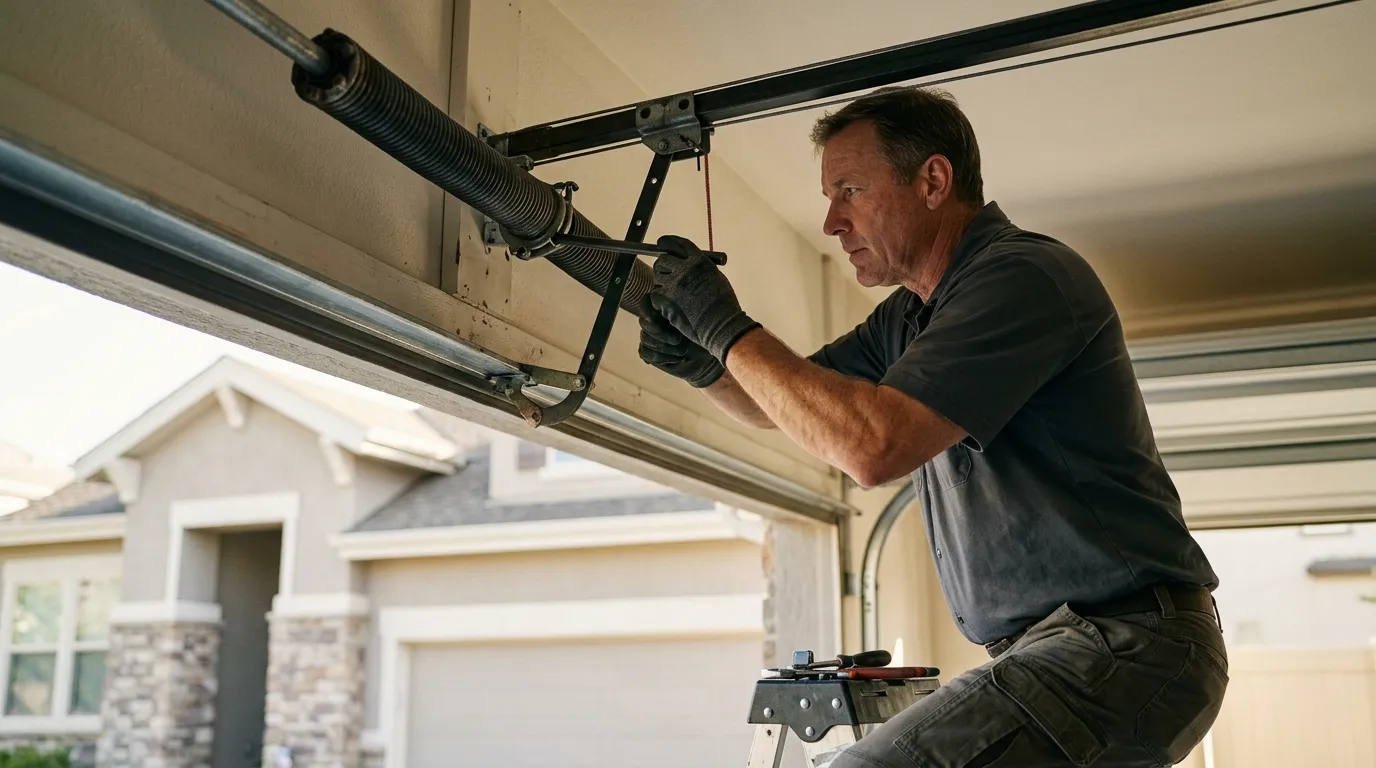
Most houses in Flat Rock went up around 1993, which puts this pocket noticeably newer than a lot of the wider Hendersonville area, where the typical build year runs closer to 1982. That gap matters for an install crew. A 1993 build usually already has a steel sectional door on standard torsion hardware bolted to a wood jamb that's still square, not the older side-mount or extension-spring setups you find on houses from the 1960s and 70s. So a new install here is less often a structural fight with a sagging header and more often a straight swap: pull the old door and track, check the jamb is still true, set new track and springs sized for the new door's weight. We still open the wall and look. A 1993 opening can have settled, and the drywall return or trim can be a different width than what a big-box door kit assumes. We measure before we quote, not after we've ordered the wrong panel.
Winters here fall in the same cold-climate band as the rest of the service area, which means insulated panel doors with a sealed bottom astragal are worth the extra cost on a house this age - the framing is tight enough that a poorly sealed door actually shows up as a draft in the room next to the garage, not just a cold garage.
We run out of Hendersonville, about 4 miles from Flat Rock, so there's no separate branch or crew based in town - a truck comes from Hendersonville for the measure and again for the install. Booking works the same as anywhere else we cover: we get the opening width, headroom, and door style you want, then schedule the visit. Because Flat Rock's housing stock is fairly uniform in age, a lot of the sizing questions get answered before the truck even leaves - we already know roughly what opening and header height to expect on a house built in the low 1990s in this area, which cuts down on surprise trips back for the wrong track length.
If you're replacing a door on a newer build in this pocket, tell us that up front - it changes which torsion spring and drum combination we bring, and it means we're not hauling parts sized for an older extension-spring garage that doesn't exist on your street.
The failure mode we see most on 1990s-era garages isn't rot or a rusted track, it's an opener bracket or header that was never sized for a heavier insulated door. Builders in that era often ran the cheapest single-layer steel door with the lightest spring the code of the day allowed. Swap that for a heavier double-insulated door today and the original header can flex, or the opener - rated for the lighter door - starts slipping and stripping gears within a year. We check the header and re-torque or resize the spring before we hang anything new; skipping that step is how a new door ends up sagging at the corners inside eighteen months.
The other spot this goes wrong: homeowners in this income bracket often want a heavier, higher-end door - real wood-look composite panels are common asks here - without upgrading the opener to match. A door that's twice the weight of the old one on the same half-horsepower opener will burn out that opener fast. We won't install a mismatch like that even if it's what was asked for; we'll say so and price the opener upgrade alongside it.
A straight swap on a house like the typical Flat Rock build - square jamb, existing torsion setup, no header rework - runs a half day once the door itself is on the truck. Add header reinforcement or an opener upgrade because the new door is heavier than the old one, and you're looking at a full day. Custom panel orders, which come up more here given the higher-end doors people tend to want on newer builds, add lead time before the crew ever shows up; that part isn't within our control and we won't promise a date until the door is confirmed at the supplier.
If you're handy and just replacing weatherstripping or a bottom seal on a door from this era, that's a reasonable DIY job - the astragal track is simple and forgiving on a house this age. Swapping the door itself is a different matter. Torsion springs on a standard 1990s double door hold enough stored force to break a bone or worse if the winding bar slips, and resizing spring and drum for a heavier replacement door isn't a guess-and-check job. We'll walk you through what a self-install kit assumes about your opening if you ask, but we won't talk anyone into doing the spring work themselves. That's the one part of this job we always say no to handing off.
No. We're based in Hendersonville, about 4 miles away, and we send a truck out for both the measure and the install. There's no separate depot or crew in Flat Rock, just the same team that covers the whole service area.
Often not without an upgrade. Builders in that era typically matched a light steel door to a half-horsepower opener. A heavier insulated or composite door can overwork that opener within a year. We check the door weight against your existing opener before we install and tell you if it needs replacing too.
A straight swap on a square jamb with existing torsion hardware usually takes about half a day. If the header needs reinforcing for a heavier door, or the opener needs replacing, plan on a full day. Custom door orders add lead time before the crew ever arrives.
Call now or request a free quote - same-day service on most repairs, upfront written pricing.