Hendersonville, NC · Garage Door Service
Laurel Park homes date to the early 1980s, so panel replacement usually means matching discontinued steel sections, not a simple swap. Here's what that job actually involves.
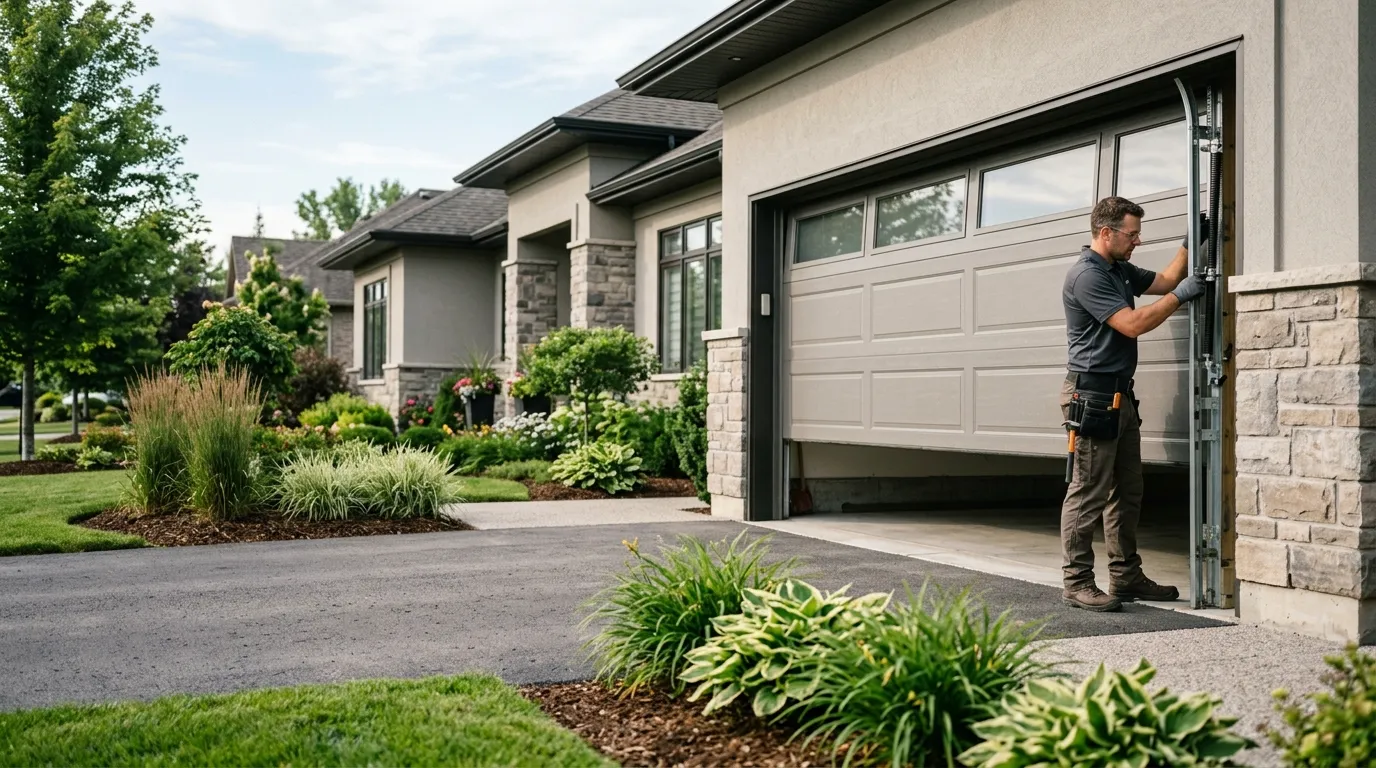
The call we get from Laurel Park is almost always the same shape: a dented or rusted-through panel on a door that's otherwise fine, and the homeowner assumes we just order the matching piece and slot it in. Most of the time that's not how it goes. Laurel Park sits three miles from our Hendersonville shop, so getting a truck out to look at the door isn't the hard part. The hard part is what we find when we get there.
Most houses in Laurel Park went up in that 1959-2001 stretch that runs across this whole service area, with the median build year landing around 1981. Doors from that window were steel, sectional, and built to panel widths and rib patterns that manufacturers stopped making decades ago. Before we quote anything, we need to see the door in person - the section height, the hinge spacing, the track profile. A phone description of "the middle panel is dented" doesn't tell us whether we're looking at an easy match or a door that's about to force a bigger conversation.
If you're handy and the door is a common size, ordering a single replacement panel and bolting it in isn't outside a homeowner's reach - the hinges unbolt, the old section comes out, the new one goes in, you reset the hinges and rollers. That part isn't the risk.
The risk with a house from the early 1980s is buying a panel that looks close on a listing photo but is a slightly different rib depth or section height than what's actually on your door, because that era predates the sizing that became standard later. You won't know it's wrong until it's hung and the seams don't sit flush, and by then you've spent money on a part you can't return once it's drilled. If your door is a common modern size, DIY is fine. If it's original to a Laurel Park house from that build era, at least bring us a clear photo and the measurements before you order anything - a five-minute look can save you a wasted panel.
We don't publish a flat number here because panel cost swings on things we can't see from a phone call: whether the section is insulated or plain steel, whether it's a standard width or one of the older non-standard sizes common on 1980s-built doors, and whether the color and texture on a sun-faded door will actually match a new panel or leave a visible seam.
What we can tell you is the pattern we see across this part of the service area, Laurel Park included: on a door that matches current stock sizing, a single-panel swap is a straightforward job. On a door where the panel is discontinued - which happens more often here than on newer construction closer to town - you're often pricing out a full door replacement instead, because a custom-matched single panel can cost more than the rest of the door combined. We'll tell you which situation you're in before we quote, not after.
The failure we see most in Laurel Park isn't the panel itself - it's what's attached to it. A door built around 1981 has had roughly four decades of hinges, rollers, and track brackets working on original hardware, and a bent or cracked panel is often the symptom of a roller that jumped track or a hinge that's been slowly tearing loose from rusted steel. Swap the panel and leave that hardware alone, and the new section takes the same abuse the old one did.
Cold winter swings in this area also matter more than people expect. Steel panels from the early 1980s were often built with thinner foam cores than what's standard now, and a cracked or gapped seam lets cold air straight into the garage - which shows up as a frozen opener chain or a door that's suddenly harder to lift on the coldest mornings. If your panel damage is more than a year old, we'll check the whole section before we quote, not just the dent you called about. One honest limit: if the panel is fully discontinued and the rest of the door has 40 years on it, we'll tell you replacement beats repair, even if that's not the answer you called for.
Sometimes. If your door is a standard size that's still made, yes. If it's a non-standard width or rib pattern common on houses built around 1981, an exact match often isn't available anymore, and we'll walk you through a close match or a full door swap instead.
No - we run out of our Hendersonville shop and cover Laurel Park as part of the surrounding service area. It's a short trip for us, about three miles, so it doesn't add to your wait beyond normal scheduling.
Steel panels from the early 1980s often used a thinner foam core than what's built today, so they're more brittle after decades of temperature swings. A hard knock that would dent a modern panel can crack an older one along the seam.
Call now or request a free quote - same-day service on most repairs, upfront written pricing.