Hendersonville, NC · Garage Door Service
Hendersonville's 1959-2001 housing stock and cold-severe winters push tracks out of line. Here's what actually causes it and what to check first.
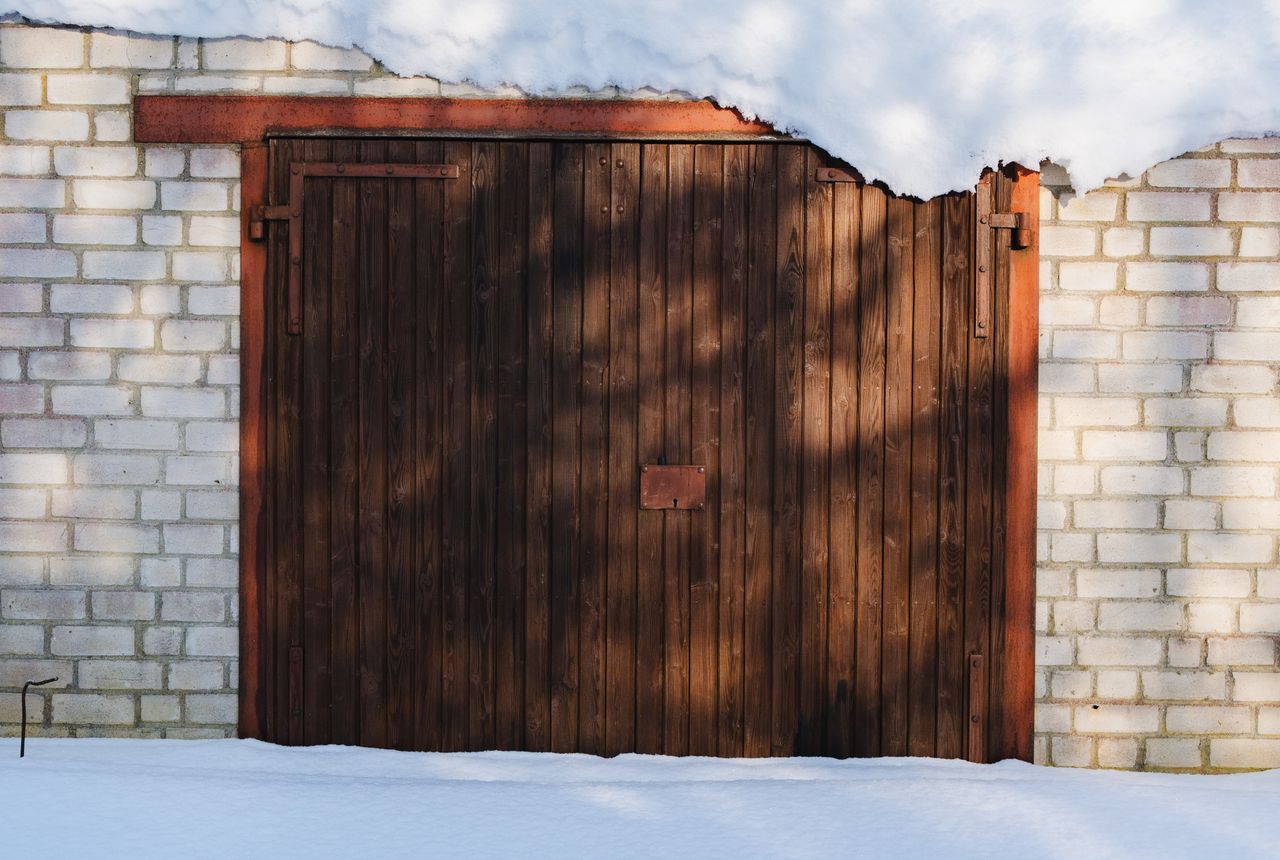
Most of the doors we get called out on around here were hung on houses built between 1959 and 2001, with a lot of that stock landing around 1982. That's a door and track combination old enough that the original steel has gone through forty-plus winters of expansion and contraction. Cold-severe conditions mean the tracks themselves shrink slightly in hard freezes, and the mounting brackets holding them to the jamb work loose a fraction at a time. You don't feel it happen. You just notice one day that the door shudders on the way down instead of gliding.
This isn't a one-season problem. It's cumulative. A track that was bolted straight in 1985 has had thirty-plus freeze-thaw cycles to nudge those bolts a sixteenth of an inch at a time. On a lot of the houses in this area, nobody's touched that hardware since it went up. The door still opens and closes, so it gets ignored, right up until a roller finally jumps the rail.
Cold-severe winters do two specific things to a garage door track. First, the metal itself contracts, which can pull track sections a hair out of the alignment they had in warmer months - just enough for a roller to catch the edge instead of riding flush. Second, and this matters more with 1980s-90s stock, the wood jamb the track is bolted to moves with humidity and temperature swings independent of the metal. Steel and lumber don't shrink at the same rate. Over decades that mismatch loosens lag screws, and a loose screw lets the whole track rail flex sideways under load.
We see this most on doors that never had their track hardware re-torqued after the original install. If your house falls into that median-1982 build window, there's a real chance nobody has re-seated those bolts in the door's working life. Add a stiff cold snap and a rail that was already a little loose can walk out far enough for a panel to bind or a roller to drop out of the channel entirely.
Before you assume it's the opener or the spring, look at the vertical track sections near the bottom rollers - that's where 1980s-90s hardware tends to show the first play. Put your hand on the rail and see if it moves side to side when the door is closed. Any wobble there means the lag screws have backed out, which is common enough on original installations from this era that it's usually the first thing worth ruling out.
Next, check the horizontal track where it meets the vertical section near the top of the opening. That joint is bolted, not welded, on almost all doors from this build period, and it's a second spot where decades of thermal cycling loosen things. If the track looks straight but the door still binds, the issue is more likely a bent section from an impact, not age - and that's a different repair.
We don't recommend trying to re-align a track yourself once it's out more than a little. The spring is under load the whole time you're near it, and a rail that lets go while you're working on it can put a bar through a windshield or a hand.
Across the houses we work on in this area, the pattern holds pretty consistently: doors installed during that 1959-2001 run, especially the 1980s-90s cluster, start showing track trouble once the hardware's original fasteners have gone through enough cold-severe winters to work loose. It's not a defect in any one door. It's what happens to steel track bolted to a wood jamb over that many freeze cycles.
If you're within a few miles of town - out toward Balfour, Laurel Park, or Valley Hill, say - you're looking at the same housing-age profile and the same winters, so the same wear pattern applies. Re-tightening and re-aligning a track that's just started to walk is usually a straightforward call. Once a rail has bent or a bracket has actually pulled out of the jamb, that's a replacement conversation, not a tightening job, and we'll tell you which one you're looking at before we start.
An off-track door usually shows visible daylight between the roller and the rail, or the door sits crooked when closed. Noise alone - squeaking or rattling - is more often a lubrication or hinge issue. If the door looks straight and closes flush but is loud, that's a different, usually cheaper fix than a track problem.
Loosening a track past a small wobble means working near a loaded spring, and that's not a place to improvise. If the rail moves side to side more than a little when you check it by hand, call it in rather than tightening it yourself.
Cold-severe winters here contract the steel track slightly and the wood jamb behind it moves at a different rate. That mismatch is gradual, but a hard freeze can be the point where an already-loose bracket finally lets a roller jump the rail.
Yes. A lot of the homes we service went up between 1959 and 2001, with the median around 1982, and that hardware has had decades of freeze-thaw cycles to work loose. If nobody's re-torqued the track bolts since the original install, that's the first thing worth checking.
Call now or request a free quote - same-day service on most repairs, upfront written pricing.