Hendersonville, NC · Garage Door Service
Garage door repair for Hendersonville homes built 1959-2001, where cold-climate hardware wears out the same way across the 20 areas we run calls in.
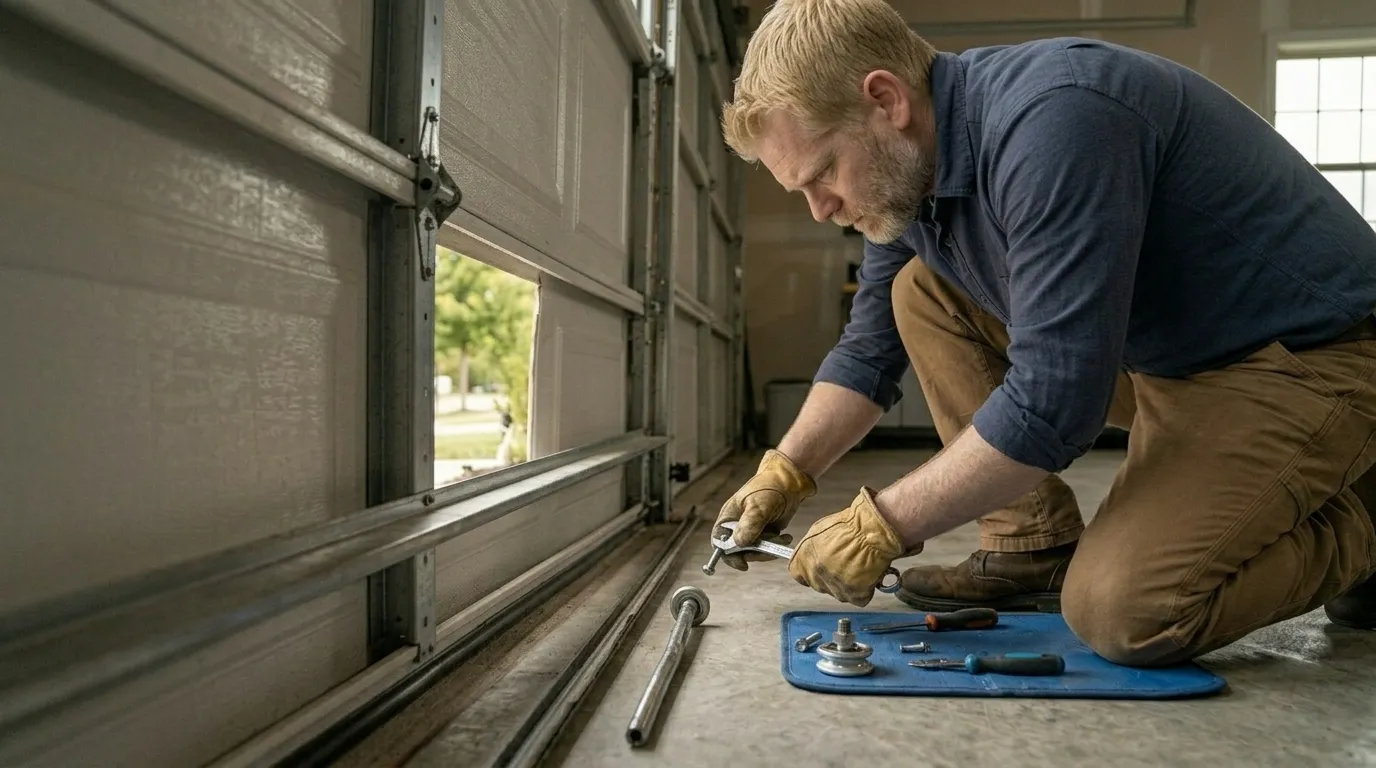
A lot of what breaks on a garage door is fixable with a wrench and a Saturday morning: loose hinges, a track knocked out of line by a bike, worn weatherstripping. If your door is noisy but still opens and closes evenly, tightening hardware and lubricating rollers is worth trying before you call anyone.
What you should not touch is the torsion spring above the door or the cables running down either side of the track. Those are wound under enough tension to break a hand or worse, and on the double-door setups common in this area, the spring is sized for the full weight of a two-car door - a wrong swap makes the opener strain and burn out early. If your door is stuck shut, sagging on one side, or the spring itself is visibly separated with a gap in the coil, that's a call, not a project.
We'll also say plainly: some doors aren't worth repairing. If the door itself is original to a house built in the early 1980s and the track, spring, and opener all need work at once, replacement usually costs less over the next ten years than patching each part separately. We'll tell you which situation you're in before we quote anything.
Most spring and cable repairs on a single door run inside a couple of hours once we're on site with the right part loaded on the truck. Opener swaps take longer if the existing unit is wired into a house system from the 1980s or 90s, since matching the bracket and rail to older framing takes more fitting than a straight swap into newer construction.
What we can't promise is a same-day fix on every part. Some spring sizes and older-style opener rail kits aren't something every truck carries, and if your door is one of the less common models still running from that original 1959-2001 build wave, we may need a day to source the right part rather than force a mismatched one onto your track.
We'd rather tell you it's a two-day job up front than rush a spring that's rated wrong for your door's weight and have it fail again in a year.
Housing in this area went up mostly between 1959 and 2001, with the bulk of it dating to the 1980s and 90s across the twenty communities we cover, from Balfour and Laurel Park a few miles out to Fletcher and Mills River eight miles off. That means a lot of original torsion springs and openers are now three, even four decades old, well past the cycle count they were built for.
The cold-climate winters here make it worse. Steel spring coil contracts in the cold and the grease inside sealed bearings thickens up, so the same spring that was already near the end of its rated cycles works harder on a 20-degree morning than it did in July. That's why we see a spike in snapped springs and hard-starting openers on the coldest stretches of the year - it's not that the cold breaks a healthy spring, it's that it finishes off one that was already close to done.
A door built to code standards for this area's older housing stock also tends to run heavier insulation and thicker panels than newer builds elsewhere, which puts more load on aging springs than they were sized for when the house was new.
If your door slams the last foot of travel instead of settling, or the opener strains and reverses partway up, that's usually a spring that's lost tension - common on doors original to the 1970s-90s housing wave that makes up most of this area. A door that's noticeably heavier to lift by hand than it used to be is telling you the same thing before the spring actually breaks.
A loud bang from the garage, often on a cold morning, is very likely a torsion spring letting go outright. The door won't lift past a few inches with the opener afterward - don't keep hitting the button, since that just burns out the opener motor trying to lift a door with no spring assist.
Grinding or popping from one side while the door still moves points to a bent track or a roller that's worn through, which is fixable but gets worse fast if a car bumps the door with the roller already loose. If you're not sure which of these you've got, a look at the spring coil - intact and wound tight versus visibly separated - tells you most of what you need to know before we're on site.
Steel contracts and stiffens in the cold, and grease in the bearings thickens too, so a spring that's already near the end of its rated cycle life works harder on a freezing morning than in summer. It's usually finishing off a spring that was already worn, not breaking a healthy one.
Likely, yes. A lot of housing in this area dates to that build wave, and openers from that era are past the service life they were designed for. Combined with heavier original doors, the motor often strains longer than a newer setup would, which shortens its life further.
If the door is original to an older build and multiple parts - spring, track, opener - need work at the same time, replacement is often the better value over the next several years than fixing each part separately. We'll tell you honestly which situation applies before quoting.
Most single-door spring jobs finish within a couple hours once we're on site with the right part. If your door uses a less common spring size or an older opener rail kit, sourcing the right part can add a day rather than force a mismatch onto your track.
Call now or request a free quote - same-day service on most repairs, upfront written pricing.